England's 115-run victory over New Zealand in the first England vs New Zealand Test at Lord's was many things simultaneously: ugly, gripping, and ultimately convincing. Played on a surface the MCC themselves admitted had fallen short of expectations, with 40 wickets tumbling across just 166 overs, the match rarely rose above a scrappy fight for survival on both sides. Yet within that scrappiness, careers shifted, reputations took hits, and the 2027–29 ICC World Test Championship cycle got its first meaningful data point.
For a side that lost 4–1 in Australia this past winter, England needed a result. They got one, though, reading too much into a victory on such a bowler-friendly surface would be unwise. What the match did offer, rather clearly, was a set of individual verdicts. Some players emerged with their standing transformed. Others left Lord's with serious questions hanging over them, heading to The Oval on 17 June. Here are the seven biggest winners and losers.
WINNERS:
1. Ollie Robinson — The Most Emphatic Comeback in Recent Memory
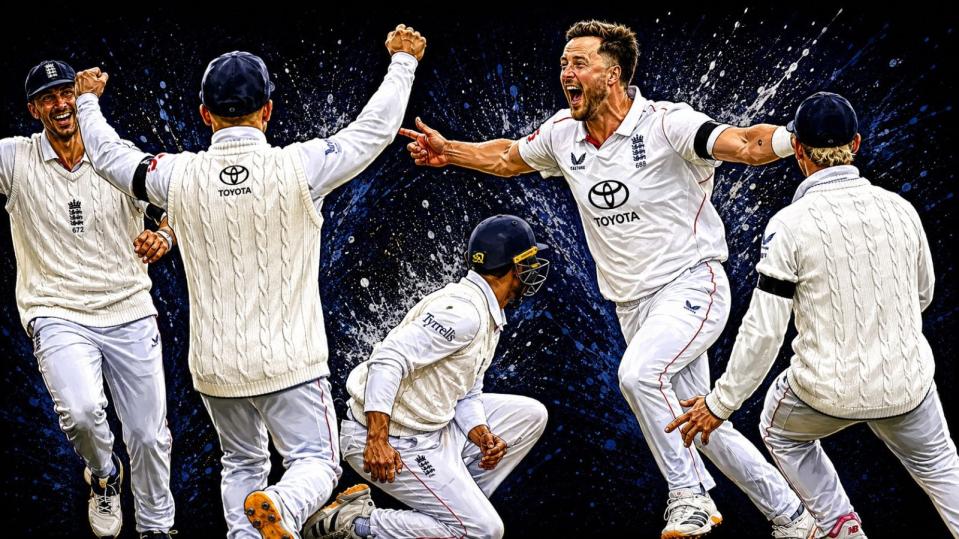
Given his two-and-a-half years in the international wilderness, Robinson's return could not have gone better. He took career-best match figures of 7 for 77, claimed the Player of the Match award, and took his overall Test bowling average below 22. His first-innings haul of 5 for 39 set the tone on day one, reducing New Zealand to 61 for 6 in just 19 overs, and his second-innings contribution of 2 for 38 helped close out the win with clinical efficiency.
The 32-year-old also chipped in with 29 runs lower down the order to help set a challenging total. "I know that this is just the start," he said afterwards, and on this evidence, selectors would be foolish to disagree. Robinson looked sharper, fitter, and hungrier than at any point in his previous England career.
2. Gus Atkinson — Lord's Belongs to Him
There is something almost supernatural about Atkinson's relationship with this ground. His 5 for 30 in New Zealand's second innings brought his record at Lord's to 26 wickets at a staggering average of 9.50 across six bowling innings. He took 12 wickets against West Indies on his debut two years ago, followed that with a century and another five-for against Sri Lanka, and now adds this fourth Lord's five-wicket haul to the honours board.
Although Robinson took the match award ahead of him, Atkinson's second-innings burst effectively finished the Test, with his clean-bowling of Matt Henry completing the victory. His pace, occasionally touching 90mph even after a concussion scare during the build-up, remains a genuine force on seaming English surfaces.
3. Emilio Gay — A Debutant Who Seized His Moment
England vs New Zealand analysis would be incomplete without acknowledging Gay's composed contribution on debut. The opener compiled 57 in the second innings, the highest individual score of the entire match, on a surface where the vast majority of the world's best batters had found scoring almost impossible. He absorbed pressure early, showed excellent judgment of line and length, and gave England's second innings the platform it needed after the top order had wobbled again.
New Zealand's failure to review an lbw shout when he was on 24 proved decisive, but Gay still needed to convert that luck into substance, and he did. For a debutant on a difficult pitch, in a high-pressure environment following England's Ashes defeat, that half-century demonstrated the temperament selectors had backed.
4. Ben Stokes — The Captain Who Read the Conditions Best
Stokes himself contributed little with the bat, a duck in the second innings, but his captaincy throughout was astute. As he said after the match: "You've got to identify the conditions as a team and understand what you think is the best way for you to go out there and win. And we did that better than New Zealand this week."
His bowling changes, the decision to push Robinson back into the attack at key moments, and his use of the short ball against the lower order all reflected sharp tactical awareness. He also took a sharp catch in the gully to dismiss Devon Conway at a crucial stage of New Zealand's second innings. This was a captain who managed his resources cleverly on a surface that demanded it.
LOSERS
5. Devon Conway — A Shadow of His Best Self
Devon Conway made a double hundred on his Test debut at Lord's five years ago. The batter who returned this week was virtually unrecognisable from that version. He laboured for a combined total of just 54 runs across both innings, looked uncomfortable against the moving ball throughout, and benefited from a dropped chance at second slip in the second innings without ever looking capable of capitalising.
The partnership he put together with Glenn Phillips was the second-highest stand of the Test, at 53, which tells you everything about the state of the New Zealand batting as a whole. His struggles with rhythm at this level have become a recurring theme, and the second Test at The Oval will demand something significantly more assured from New Zealand's most experienced top-order batter.
6. Tom Latham — Fielding Errors That Cost New Zealand the Match
New Zealand's captain won the toss, made a defensible decision to bowl first, and watched his side fall apart in the field at precisely the moments when tighter execution might have changed the result. Latham himself was involved in multiple fielding errors, including a catch he and Daryl Mitchell left for one another, and New Zealand dropped four catches across the match in total. Critically, they also failed to review an LBW appeal against Gay when he was on just 24, a decision that would have sent him back to the pavilion well before his crucial 57.
"With the game being so short, those small moments are really important," Latham acknowledged afterwards. He is right, and unfortunately for him, those moments all went the wrong way. Combined with losing early wickets in both innings with reckless shots, including his own dismissal from just the third ball of the second-innings chase, Latham had a match to forget.
England collected 12 WTC points from the victory, while New Zealand received none, and the gap this creates matters more than the raw numbers suggest. The Black Caps now face the second Test at The Oval on 17 June and the third at Trent Bridge on 25 June, with the series already against them, and with clear technical and fielding issues that nine days between Tests will not fully resolve.
Their batting order, which featured Kane Williamson dismissed twice for a combined five runs and never looked comfortable against the seam and swing England's attack generated, requires urgent attention. The WTC standings after the first England vs New Zealand Test make difficult reading for a side that had genuine ambitions for the next cycle after falling short in recent finals campaigns.
The Lord's Test settled quickly and ended messily, but it delivered clear conclusions about where both sides stand. England have genuine reasons for encouragement, most notably the re-emergence of Robinson and the continued excellence of Atkinson, though the performance of their top-order batters will need to improve considerably on better surfaces ahead of the series decider. For New Zealand, the England vs New Zealand Test served as a reminder that the margins at this level are brutally thin, and that dropped catches and poor reviews at key moments separate victories from defeats.