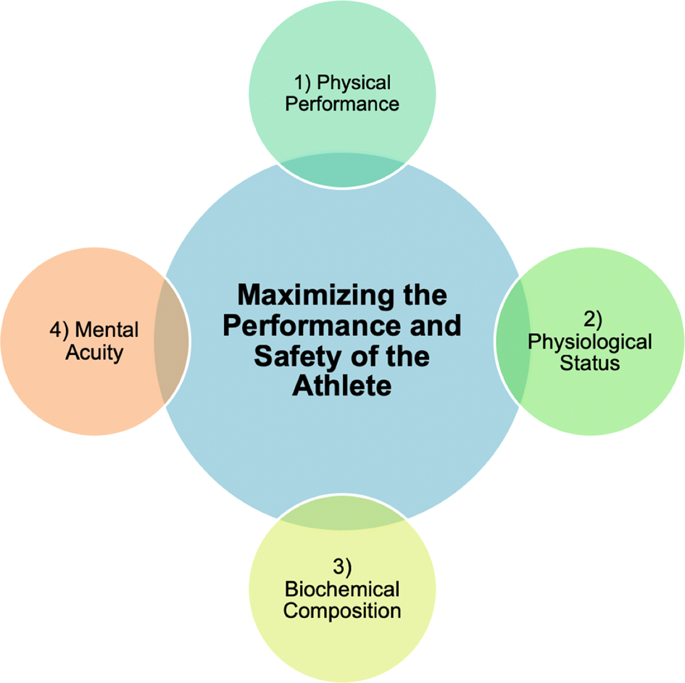
The organization of this review is structured around discussing the value wearable sensors provide in sports to monitor player activity levels and mitigate injury. We progress through this review by discussing the utility of wearable sensors in two domains crucial to human performance ranging from an athlete's physical performance and physiological status. Our goal in each of these areas is centered around reviewing both scientific literature and current commercially available devices to provide a comprehensive view of wearables for sports medicine (Tables 1-5). This review is specifically targeted towards those whose interests lie in the application and translation of wearable sensors for assessing human performance.
The ability to monitor position and movement profiles of an athlete is critical in developing improved training regimens to maximize individual performance (Fig. 2). The accuracy of devices, such as pedometers has been in question and was recently studied. Researchers compared the accuracy of the "step-count" feature between dedicated smartphone-based pedometer applications (Galaxy S4 Moves App, iPhone 5s Moves App, iPhone 5s Health Mate App, iPhone 5s Fitbit App) and wearable devices (Nike Fuelband, Jawbone UP24, Fitbit Flex, Fitbit One, Fitbit Zip, and Digi-Walker SW-200) with direct observation of step counts. Results showed a relative difference between actual and reported mean step count of -0.3% to 1.0% for pedometers and accelerometers, -22.7% to -1.5% for wearable devices, and -6.7% to 6.2% for smartphone applications. Such differences were attributed to the robustness of the IC technology and software algorithms used to determine a step. Step counts are often used to derive other measures of physical activity, such as distance traveled or calories expended. Hence, improving measurement accuracy is crucial to measure and appropriately tailor workout regiments for elite-level athletes.
Movement-based sensors currently in use for sports-medicine include accelerometers and global positioning satellite (GPS) devices, often used in combination (Table 1). Accelerometers generate highly accurate analyses of movement with high sampling rates and have been included in wrist-based devices, such as the Nike Fuelband, Jawbone UP, and Microsoft Band. This technology has been widely adopted in the sporting community ranging from Australian Football, Rugby, NFL, National Hockey League (NHL), and swimming. Energy expenditure can be determined from tri-axial accelerometers via the integration of acceleration over time. The determination of energy expenditure, position, movement, and balance control during practices or games has shown to be instrumental in tailoring the training regimen of athletes to minimize the incidence of soft tissue injuries.
Banister et al. postulated that athletic performance can be estimated as a function of fatigue and fitness (Fig. 2). Building upon this model, Morton et al. suggested that an opportune training stimulus is one that maximizes performance by utilizing an appropriate training load, while simultaneously minimizing injury and fatigue. A working definition of fatigue is "any exercise-induced or non-exercise-induced loss in total performance due to various physiological factors, athlete reported psychological factors, or a combination of the two". It is well known that fatigue decreases athletic performance and that training induces numerous neurophysiological and psychological changes in an athlete's body. There are two forms of fatigue: central fatigue and peripheral fatigue. Central fatigue is the fatigue resulting from the central nervous system (CNS) and the transmission of signals from the brain to the muscle. Central fatigue is related to the interaction between the brain and the spinal cord. Researchers have hypothesized that the differentiation between a good athlete and an elite-level athlete is their individual ability to ignore such neurotransmissions during high-acuity situations (e.g. high profile matches or workouts). Peripheral fatigue is the failure to maintain an expected power output caused by the depletion of glycogen, phosphate compounds, or acetylcholine within the muscular unit or by the accumulation of lactate or other metabolites that are released during activity. Peripheral fatigue occurs within the muscle and can be thought of as 'muscle fatigue'. As such, wearable sensors can be used to measure parameters indicative of the peripheral fatigue of the athlete, as is discussed in detail throughout this review. For simplicity purposes, we refer to peripheral fatigue as simply fatigue.
Monitoring internal (e.g. physiological or perceptual 'response') and external training loads (e.g. physical 'work') can enable sports trainers and clinicians to assess the fatigue and fitness levels of athletes in real time. Internal workload includes the session rate of perceived exertion (sRPE) and heart rate. At the completion of each training session, athletes provide a 1-10 'rating' based on the intensity of the session. The intensity of the session is multiplied by the session duration to provide the internal training load. The product can be thought of as the athletes' "exertional minutes". Advancements in MEMS fabrication techniques and device packaging have allowed for the detection of multi-axial movement to calculate an external training load (e.g. PlayerLoad™). External workload can be thought of as how much load is placed on the body and can be quantified using torso-mounted wearable devices which contain a GPS and a tri-axial accelerometer. PlayerLoad™ can be calculated via the instantaneous rate of change of acceleration. Accumulated PlayerLoad™ can be calculated as the summation of PlayerLoad™ over the desired time interval (usually over a span of 1-7 days).
Metrics such as total distance run, weight lifted, number and intensity of sprints or collisions can be determined using GPS-based sensors. Position sensors triangulate signal transmission from multiple GPS satellites orbiting the earth and can accurately determine the velocity and position (within 1 m) of an athlete on a field. These devices are playing an instrumental role in sports performance analysis by allowing coaches, physicians, and trainers to better understand real-time physical demands of an athlete. GPS silicon chips combined with tri-axial accelerometers have been used to record physical activities during different times of the day and for specific position groups on a team. The majority of work to assess human motion and its correlation to sports performance has involved the use of commercial GPS-based devices, such as the Catapult devices (OptimEye S5) and Zebra Technologies GPS device. The Catapult product, for example has a fully packaged processing IC, accelerometer, gyroscope, and magnetometer to measure body position, impact forces, velocity, acceleration, and direction in a continuous manner. In a study utilizing the Catapult OptimEye S5 and video tracking technology, 20 professional Australian Football League (AFL) players were studied during four in-season matches to describe and quantify the frequency, velocity, and acceleration at impact during tackling (Fig. 3a-c). Distributions in tackles were quantified and classified as a function of percent distribution of tackles versus player load (Fig. 3a), player velocity versus tackle intensity (Fig. 3b), and player load versus tackle intensity (Fig. 3c). Differences in accelerometer data between tackles were observed to be progressively greater in intensity thereby providing support for the use of accelerometers to assess impact forces in contact-based sports. In another study, GPS sensors and related analytics were used by National Collegiate Athletic Association (NCAA) Division I Football athletes to record workload, velocity, distance, and acceleration during both practices and games. The studies found significant variation in movement profiles among collegiate football players and the authors identified the need for position-specific and game-specific physical conditioning strategies to maximize player performance, limit the effects of fatigue, and minimize the onset of injuries.
The combination of the internal and external workloads of the athlete determine the training outcome. An athlete's internal or external workload can be computed over a 1-week period (acute workload) and over a 3-4-week period (chronic workload). Work by Gabbett suggested that the ratio of the acute-to-chronic workload, herein referred to as "ACWR", can be used to determine if an athlete is overtraining, undertraining, or training at the opportune intensity (Fig. 2b). Furthermore, Gabbett showed that calculation of this ratio enables sports scientists to predict the chance an athlete suffers an injury as a result of improper load management. Deriving this ratio provides an index of athlete preparedness and considers the training load that the athlete has performed relative to the training load that the athlete has been prepared for. The use of the ACWR emphasizes both the positive and negative consequences of training. The first study to investigate the relationship between ACWR and the risk of injury was performed on elite cricket fast bowlers. Training loads were estimated from both sRPE and balls bowled. When the acute workload was similar to or lower than that of the chronic workload (e.g. ACWR ≤ 0.99), the likelihood of injury for fast bowlers in the next 7 days was 4%. However, when the ACWR was ≥1.5 (e.g. workload in the current week was 1.5 times greater than what the bowler was prepared for), the risk of injury was 2-4 times greater in the subsequent 7 days. While such observations are indicative of the sport being studied, until more robust data sets are available, caution must be heeded when applying these recommendations to individual sport athletes. Despite this, a general trend can be concluded. If the acute training load is low (e.g. the athlete is experiencing minimal fatigue) and the rolling average (RA) chronic training load is high (e.g. the athlete has developed 'fitness'), then the athlete will be in a well-prepared state and thus, the ACWR will be ≤1. If the acute load is high (e.g. training loads have been rapidly increased resulting in 'fatigue') and the RA chronic training load is low (e.g. the athlete has performed inadequate training to develop 'fitness'), then the athlete will be in a fatigued state and thus, the ACWR will be ≥1. In terms of injury risk, ACWRs within the range of 0.8-1.3 could be considered the training 'sweet spot', while an ACWR ≥ 1.5 could represent the 'danger zone'.
The RA model (Eqs. (1-4)) and exponentially weighted moving average (EWMA) model (Eqs. (5-10)) are two methods used to calculate the training load of the athlete with or without the use of wearable sensors like the Catapult OptimEye S5 (Eqs. (11-14)). The RA model uses an absolute (i.e. total) workload performed in one week (acute workload) relative to the 4-week chronic workload (e.g. 4-week average acute workload). Equation (1) represents the exertional minutes per workout which is the product of the session rating of perceived exertion and the duration of the workout in minutes. The sRPE is a scale from 1 to 10 with progressing intensity of the workout deemed by the athlete and training staff. Equation (2) shows the acute player load (PL) which is the summation of the exertional minutes per workout for a given week (e.g. from day 1 to day 7). For the sake of simplicity, we assume the athlete is completing one workout per day. Equation (3) shows the chronic PL which is computed by taking the average of the acute PL over the duration of weeks (denoted as n). Equation (4) shows the ACWR which is the ratio between the acute PL for the given week (Eq. (2)) and the chronic PL (calculated from Eq. (3)). The RA model suggests that each workload in an acute and chronic period is equal. In other words, the model considers there to be a linear relationship between load and injury. The assumption in this model is that all workload in a given time period is equivalent. Key drawbacks of this model are that the model does not account for any decays in fitness and it does not accurately represent variations in the manner in which loads are accumulated.
Sports scientists have started to apply the EWMA model to circumvent the drawbacks posed by the RA model. The EWMA model places a greater weight on the most recent workload an athlete has performed by assigning a decreasing weighting for each older workload value (time decay constant, λ) and the non-linear nature of injury occurrence and workload. Equation (5) shows the exertional minutes per workout which is the product of the session rating of perceived exertion and the duration of the workout in minutes. The sRPE is a scale from 1 to 10 with progressing intensity of the workout deemed by the athlete and training staff. Equation (6) shows the degree of decay, λ, which is a value between 0 and 1, with higher values of λ discounting older observations in the model at a faster rate. In the following equation, n represents the time decay constant. Equation (7) shows the formula to calculate the EWMA for a given day which is based on the exertional minutes, calculated from Eq. (5), the degree of decay from Eq. (6), and the EWMA from the preceding day. Equation (8) shows the acute player load (PL) which is the summation of the EWMA for a given week (e.g. from day 1 to day 7). For the sake of simplicity, we assume the athlete is completing 1 workout per day. Equation (9) shows the chronic PL which is computed by taking the average of the acute PL over the duration of weeks (denoted as n). Equation (10) shows the ACWR which is the ratio between the acute PL for the given week (Eq. (8)) and the chronic PL (calculated from Eq. (9)). A recent study sought to investigate if any differences existed between the RA and EWMA models pertaining to ACWR calculation and subsequent injury risk in elite Australian footballers. Fifty-nine athletes from an AFL club participated in this 2-year study. A total of 92 individual sessions were recorded. Each season consisted of a 16-week preseason phase comprised of both running and football-based sessions, followed by a subsequent 23-week in-season competitive phase. The Catapult OptimEye S5 GPS sensor, sampled at 10 Hz, was used to quantify training and match workloads of players. The triaxial accelerometer, gyroscope, and magnetometer were each sampled at 100 Hz. The study demonstrated that a high ACWR was significantly associated with an increase in injury risk for both models. The EWMA model had significantly greater sensitivity to detect increases in injury likelihood at higher ACWR ranges during both the preseason and in-season periods. The study concluded that the EWMA model may be better suited to modeling workloads and injury risk than the RAs than the ACWR model. Regardless of the ACWR model utilized, spikes in acute workload were significantly associated with an increase in injury risk.
Wearable sensors are currently being used to minimize injury in professional football via careful monitoring of training load and other biometrics during the rehabilitation period (Fig. 2c). The variability of GPS data and accelerations of the torso have been in question when it comes to monitoring the loads of the lower limbs. This is because distance traveled and velocity do not represent the mechanical load experienced by the musculoskeletal tissue. This is specifically relevant in sports such as basketball, which are constrained to a small-space, where players experience high loads of physical stress by performing explosive jumping and landing activities, which are not accurately captured by distance, speed, or torso athlete movement analysis systems. To mitigate such issues, the Zebra GPS device and Catapult OptimEye S5, both of which are considered the most accurate wearable devices in sports today, are housed in player tracking devices in an attempt to negate some of the aforementioned issues. Additionally, the Catapult device has shown to mitigate such issues by incorporating tri-axial movements into their analytical models to accurately calculate PlayerLoad™ from their sensor. The Zebra GPS device is currently approved by the NFL for use to track player movement and has been utilized by select teams to monitor training loads. Equation (11) provides the analytical platform of the Catapult OptimEye S5 which utilizes a tri-axial accelerometer to calculate PlayerLoad™ (PL) based on acceleration in the x, y, and z directions. Equation (12) shows the summation of PL from the initial to end time of interest (in most cases this is from the start to the end of a training session) denoted as AccPL™. Equation (13) shows how the RA model can be used to calculate Acute PL, analogous to Eq. (2). However, in this case, PL is calculated from Eq. (11) using a wearable sensor. Eq. (14) shows how the EWMA model can be used to calculate PL for the given day using PL calculated from a wearable sensor. The ACWR can be calculated utilizing either model, adapting the set of equations presented (rolling average, Eqs. (1-4); EWMA, Eqs. (5-10).
In a specific example reported by an American sporting network, the device was used to accurately track the recovery of an athlete after the individual suffered a season ending injury the previous year. The sensor was placed underneath the shoulder pads (analogous to that of the Catapult device) or sewn into the jersey to generate biometric measurements, such as movement profiles and workload to gauge the athlete's performance and workload during recovery relative to his peak performance and workload prior to the injury. Additionally, utilizing the Catapult OptimEye S5 wearable sensor, authors of this review have recently studied the effects of player workload on soft tissue injuries in a single NFL team over two seasons. Rapid changes in workload over a one-week period when compared to the average workload over a month were associated with a significant increase in risk of hamstring and other soft tissue injuries. The studies demonstrated that monitoring athletic training programs during the pre-season compared to the post-season utilizing wearable technology have assisted team athletic trainers and medical staff in developing programs to optimize player performance and minimize soft-tissue injuries.
The spongy nature of a woodpecker's skull acts like a shock absorber by pinching the jugular vein to increase blood pressure in the brain to protect it from the 12,000 daily hammerings it performs on trees. Unfortunately, humans do not have any sort of 'protection mechanism' to mitigate or dissipate impact forces on the brain. The onset of concussions, brain injuries, and mental health illnesses caused by repeated trauma to the head have paved the way for newer technologies to detect and eliminate chronic traumatic encephalopathy (CTE). CTE is a neurodegenerative disease found in individuals who have experienced repeated traumatic brain injury (TBI) or concussions. In these conditions, stretching, compression, and shearing of axons during sudden brain movements over extended periods are hypothesized to cause axonal injury. The high incidence of such injuries in athletes is of major concern in modern collision sports. The American Academy of Neurology (AAN) defines a concussion as a "pathophysiologic disturbance in neurologic function characterized by clinical symptoms induced by biomechanical forces". Guskiewicz et al. concluded that former NFL and collegiate football players who reported multiple concussions were at higher risk for depression and memory loss. Research on concussions and CTE is still rudimentary and primarily supported by clinical models. There remains a strong clinical need to develop devices, which could quantitatively and qualitatively measure impact forces on the brain to decrease the onset of concussions and reduce the incidence of CTE. Currently, work is being done to design custom personal protection equipment (PPE), such as helmets and mouthguards to improve player safety. Research by Stenger et al. and McCrory et al. showed the potential applicability of mouth guards towards preventing head and spinal injuries. Companies such as i1 Biometrics, Mamori, and Force Impact Technologies have developed mouthguards that can monitor concussions (Table 2). The mouthguard by Force Impact Technologies contains embedded sensors, which relate collision intensity using color-coded LED's (green, blue, or red) located at the front of the mouthguard. The colors are representative of the impact force delivered; green represents a mild impact, blue represents a medium impact force, and red represents a major impact force. The displayed color is then relayed via Bluetooth to the appropriate medical personnel in order to initiate the necessary protocols and interventions. The company believes the sensor placement will provide a high correlation back to the center of the brain. Despite the potential benefit of this technology, mouthguards are not universally used by all athletes. There remains a need to design and fabricate wearable sensors that can monitor and quantify impacts during collisions.
Several wearable device companies such as Noggin, Q30 Innovations, and X2 Biosystems have gained prominence in their ability to track, monitor, and prevent concussions. Noggin is focused on creating a protective skull cap whereby a gel cap generates friction with the inside of the helmet to hold it in place. This reduces slippage while dispersing and reducing impact forces on the head. The device also has a dry moisture wicking fabric that helps to protect athletes from heat-induced injury. Noggin has shown that its device can decrease impact forces up to 85% via a direct blow to the head when used with an approved helmet. Inspired by the woodpecker, Q30 innovations designed a device that prevents the brain from moving within the skull by clamping down on the jugular veins, causing the brain to swell and fit more snugly within the skull. Myers et al. tested the Q-collar device on youth hockey and high-school football players and successfully demonstrated that using the wearable device during live-game scenarios may have provided a protective barrier against the microstructural changes of the brain caused after repetitive head impacts. The studies used helmet accelerometers to track the number of hits a player received that had accelerations >20 g. Magnetic resonance imaging (MRI) was used to qualitatively observe and measure the diffusivity of water in different parts of the brain prior to and after the study. Although this device has not yet received FDA approval, it shows tremendous promise in reducing the incidence of concussions and TBI in collision athletes. The X-Patch Pro wearable sensor and X2 Mouthguard devices by X2 Biosystems are currently the most utilized head impact measuring devices in the sports community. The X-Patch Pro is an epidermal sensor containing an adhesive that can be worn behind the ear to record head impacts. The device transmits to a sensor data management (SDM) application on an electronic device. The sensor demonstrated a reduction in the incidence of head impacts leading to a decrease in concussions by 30-70% and is currently being utilized to study cumulative brain damage due to repeated head impacts. The sensors contain a tri-axial high-impact linear accelerometer and a triaxial gyroscope to capture six degrees of freedom for linear and rotational accelerations. X2 Biosystems utilizes proprietary analytical software called xSposure to relate acceleration measurements with impact duration, ranked from 1 (mild impact) to 10 (major impact). Additionally, the device calculates a Gadd Severity Index (GSI), head impact telemetry severity profile (HITsp), and generalized acceleration model for brain injury threshold (GAMBIT). Collegiate football teams at the University of Virginia and the University of Mississippi have utilized wearable devices by X2 Biosystems. Recently, professional football teams have adopted this device to monitor and track their own players. Research by the University of Virginia on their NCAA Division I-A football team compared the number and severity of sub-concussive head impacts sustained during helmet-only practices, shell practices, full-pad practices, and live-game scenarios to determine whether sub-concussive head impact on college athletes varies with practice type. The 20 participating football players wore the xPatch impact-sensing skin patches on the skin covering their mastoid process over the course of a season. Results showed that regulation of practice equipment could offer a viable and promising solution to drastically reduce sub-concussive head impact in collegiate football players. In another study, the University of Mississippi utilized the xPatch skin sensor to monitor head impacts on 15 NCAA Division I-A football players. After each practice, players reviewed their head impact profiles to determine the correlation between their head impacts relative to tackling technique and form. Results showed that the xSposure score of these players decreased by 15% over the course of the preseason. Wu et al. utilized high speed video to test a teeth-mounted mouthguard (developed by the research group in a previous study), X-Patch Gen 2 soft tissue-mounted patch (adhered to the skin on the mastoid process), and the Reebok elastic skull cap during sagittal soccer head impacts (Fig. 3d-f). The study focused on a 26-year-old male human subject who underwent soccer head impacts with clenched teeth. The ball traveled at an initial velocity of 7 m/s and was inflated to 8-9 psi. This velocity represented the average header speed in youth soccer. The researchers developed a method to quantify skull coupling of wearable head impact sensors in vivo. Furthermore, they found that in-plane skin patch acceleration peaked in the anterior-posterior direction and could be modeled by an underdamped viscoelastic system. The mouthguard showed tighter skull coupling than the other sensor mounting approaches (Fig. 3d-f). Additionally, the skin patch and skull cap had higher displacements from the skull compared to the mouthguard (Fig. 3d-f). Results from these studies demonstrated that wearable devices can track and minimize concussions; however, further clinical trials and a more in-depth understanding of the analytical platforms and modeling of sensor performance are needed to have a true clinical impact in sports. The work by Reebok is particularly interesting as it entails a partnership with MC10, a start-up originally out of the Rogers research group. The Reebok Checklight includes one or more accelerometers wired up with MC10's "stretchable" electronics which consist of ultrathin gold electrodes that match the contour of the body. The partnership highlights the successful translation of scientific research into a commercial product to monitor impact forces on the head in a real-time manner. In another study, researchers developed a dry, textile-based nanosensor that detected early signs of TBI by continuously monitoring various neural behaviors indicative of the injury, such as drowsiness, dizziness, fatigue, sensitivity to light, and anxiety. The device comprised of a network of flexible sensors woven or printed into a skullcap worn underneath a football helmet. The device used Zigbee/Bluetooth wireless telemetry to relay the data from the sensors to a receiver and to a remote monitor. The system included a pressure-sensitive textile sensor embedded underneath the helmet's outer shell, which measured the intensity, direction, and location of the impact force. The other sensors worked as an integrated network within the skullcap and included a printable and flexible gyroscope that measured rotational motion of the head and body balance and a printable and a flexible 3-D accelerometer that measured lateral head motion and body balance. Additionally, the device was outfitted with physiological sensors to detect pulse rate and blood oxygen levels. At time of publishing, the device had yet to be tested in real-time football games. While follow-up clinical data is not available, assessing the use-case of such devices in randomized, controlled studies is necessary to further translate such technology to improve athletic safety and performance.
Motion analysis to study biomechanics is currently performed by measuring body kinematics via motion capture systems such as optical, inertial or magnetic units (IMU), electrogoniometers, and mechanical tracking. However, their disadvantages prevent them from being utilized for an extended duration to monitor human movement. Optical systems are expensive, require complex setups, and data processing systems, and are rarely used to assess a single joint or body part. IMU-based systems have limited fields of operation, high error rates, and high sensitivities. Mechanical tracking systems have poor portability and cannot be used during real competition situations. Therefore, there is a strong need to develop alternative technologies to monitor and quantify human-body kinematics in a non-invasive and accurate manner.
Epidermal wearable sensors can play a key role in quantifying human movement and monitoring changes in joint mechanics in order to prevent injuries. Key properties of these sensors for biomechanical detection include their high stretchability, flexibility, robustness, and durability. These sensors can be applied over the joint as a sleeve to monitor the stress and strain on the elbow, anterior cruciate ligament (ACL), medial collateral ligament (MCL), or posterior cruciate ligament (PCL). In 2015, 25% of active major league baseball (MLB) pitchers and 15% of minor league pitchers underwent ulnar collateral ligament (UCL) reconstruction. Often referred to as Tommy John surgery, the UCL in the medial elbow is replaced with either an autograft or donor allograft tendon. This reconstructive surgery typically sidelines a pitcher for the entire season due to the time-intensive rehabilitation that follows. Data from Motus Global in 2015 showed that pitchers represented ~59% of injured players in MLB and $420 million in sidelined salaries. The "motusBaseball Sensor," developed by Motus Global, is the first wearable device approved by the MLB for in-game use. The wearable sleeve quantifies the strain exerted by a pitcher to gain a better understanding of the factors that cause ligament damage. The device contains five sensors and an analytical program to view the biomechanical data. A single sensor near the elbow measures the stress exerted on the UCL. The sensor also has clinical utility for football quarterbacks (QBs). Football quarterbacks exhibit overarm throwing injuries due to overuse and require rehabilitation therapy from injuries on the throwing arm caused by contact. A recent paper by Motus Global tested the motusBaseball Sensor on a high school male baseball pitcher. The athlete was instrumented with 46 reflective markers on anatomical locations and kinematic data were collected at 480 Hz using a 12-camera 3D motion capture system (Motion Analysis Corp, mocap). The motusBASEBALL sensor was placed on the inside of the forearm ~3 cm distal to the medial elbow epicondyle. The athlete pitched a baseball off a mound into a net at a distance of ~5 m away from the pitching rubber. Following this, the athlete made seven throws with a football in a "shotgun" stance (e.g. no drop-back prior to throwing). Full body kinematics were used to calculate elbow valgus torque by both mocap and the motusBASEBALL sensor. The sensor read slightly higher peak elbow valgus torque for baseball pitching (3%) and slightly lower in football throwing (5%) (Fig. 3g). The results demonstrated that the sensor was successful in calculating maximum elbow valgus torque in both baseball and football throwing scenarios (Fig. 3g). While statistical analysis was not performed, the authors of the study concluded that the differences between the mocap calculations of torque and sensor calculations of torque were minor. The study showed that the motusBASEBALL sensor provided an accurate measure of elbow valgus torque for both baseball pitching and football throwing (Fig. 3h). Use of this data from the sensor could enable measures of acute and chronic workloads that are joint specific to the throwing arm to improve performance and minimize injury. We hypothesize that such information could enable coaches to refine throwing techniques to serve as "coachable moments" for athletes specializing in throwing-based sports to minimize serious long-term injury. Detecting biomechanical forces and arm angles have been utilized as teaching tools in sports as well. Vibrado Technologies has developed a wearable sleeve that measures arm angles and movement to model shooting motion in basketball (Table 3). This device has potential applications in basketball training and other sports where "muscle memory" is crucial for repeated success.
The ACL is the primary stabilizing knee ligament that prevents anterior translation of the tibia. ACL tears are one of the most common knee injuries observed in sports medicine. Forces in the ACL can be studied and quantified in six degree of freedoms (DOF) due to externally applied loads. An accurate device to measure the biomechanics to determine the correlation between the ACL and the kinematics of the knee is necessary for the longevity of athletes and for sports trainers and physicians to better tailor rehabilitative therapy for the athlete. Currently there is no quantifiable method or commercial device to determine ACL strain. Thus, the development of a robust sensor capable of such measurements is highly desirable for cutting and pivoting sports, such as soccer, football, basketball, and rugby. In a recent study, a wearable inertial-based device to evaluate ACL injury risk during jumping tasks was designed. The accuracy of the sensor was measured by comparing temporal events (initial contact, toe-off), jump height, and sagittal plane angles (knee, trunk) to simultaneous measurements obtained with a marker-based optoelectronic reference system on 38 healthy subjects. Overall, the wearable system demonstrated good concurrent validity with marker-based measurements and good performance in terms of the known risk factors for ACL injury. However, the obtrusive nature of the device severely hindered its utility for use during team-based activities thus necessitating significant modifications (e.g. miniaturized and unobtrusive form factor) for the athlete.
Wearable sensors for checking the inward and outer outstanding burden of the competitor
The association of this survey is organized around talking about the worth wearable sensors give I
Created - 7 years ago
Featured Video