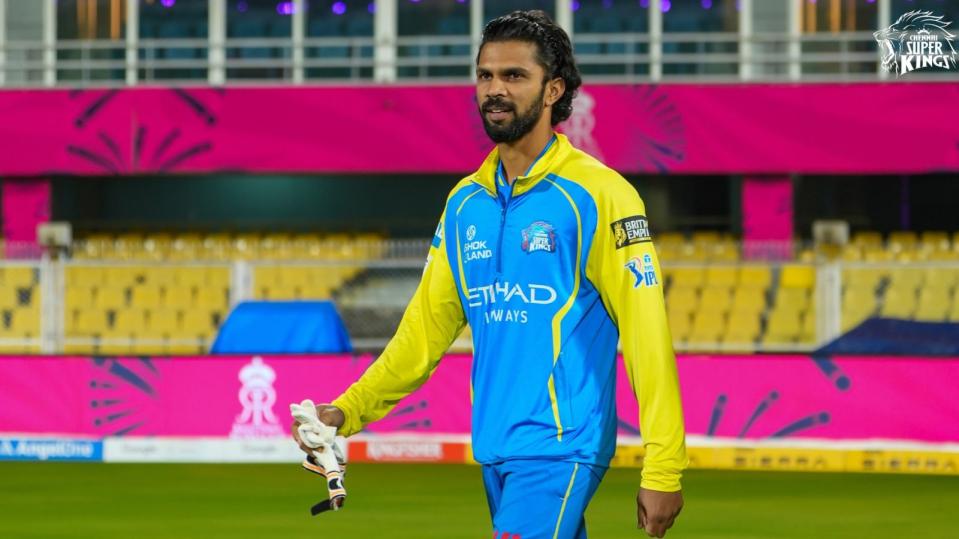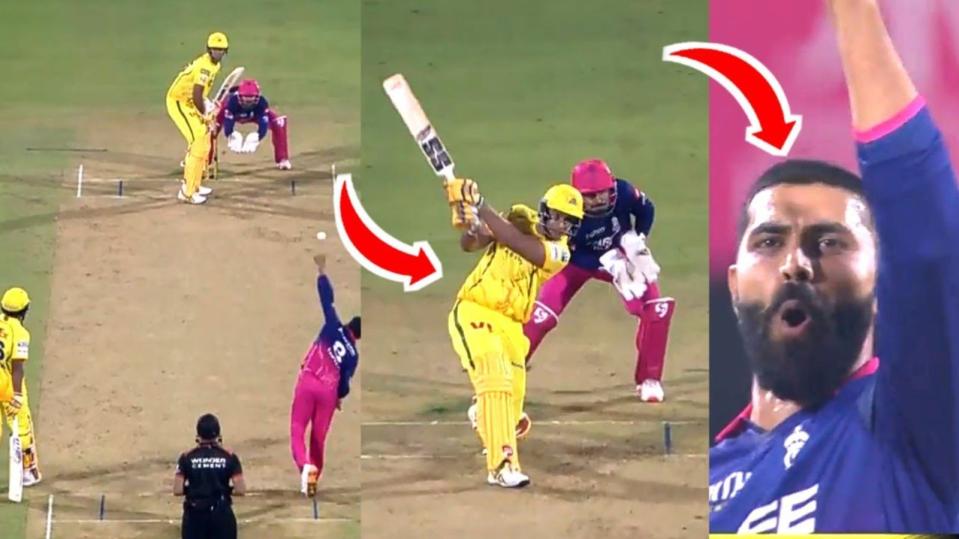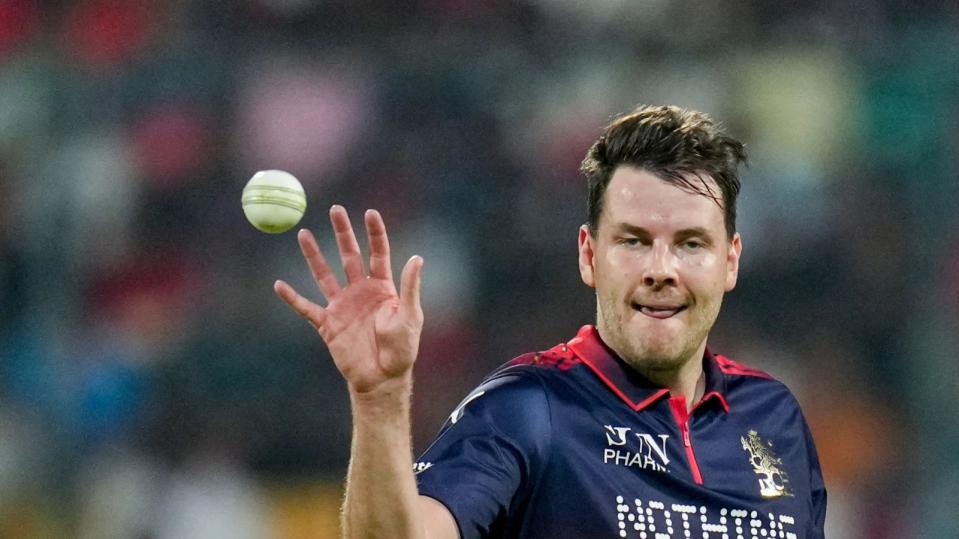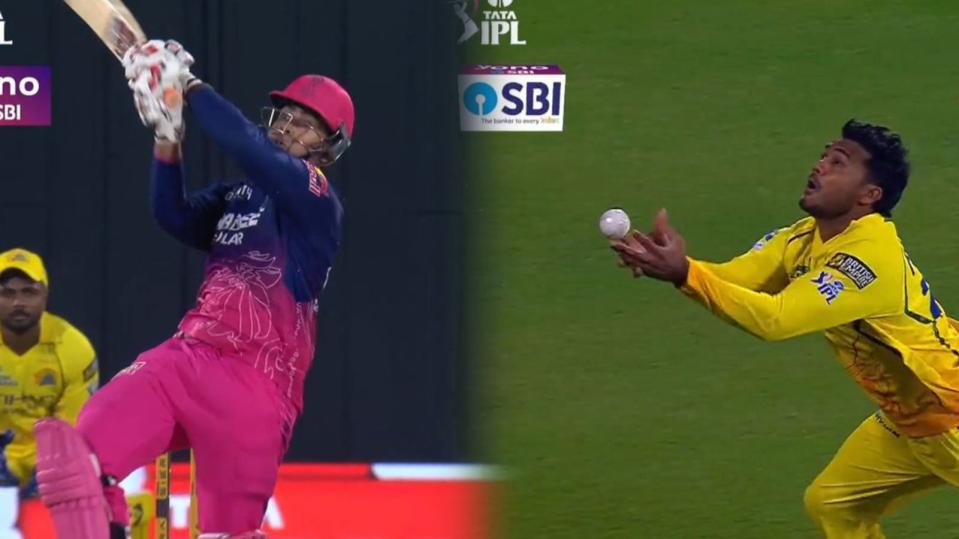
Cricket constantly produces moments that fans replay in their heads long after stumps are drawn, and the third match of IPL 2026 gave us one in its rawest possible form. Matt Henry drew a mis-hit over midwicket with a hard-length delivery from Vaibhav Sooryavanshi, but debutant Kartik Sharma, normally a wicketkeeper operating in an unfamiliar position on the outfield, dropped it at midwicket, parrying the ball to the boundary for four.
On the very next delivery, Sooryavanshi played a strong pull shot in the same area for a six, essentially sending a message to the entire Chennai Super Kings XI that no amount of misfortune would slow him down. That sequence, four and six off consecutive balls from Henry, immediately tilted the psychological importance of the contest.
What followed stretched the limits of what a teenager should be capable of doing on a cricket field. Sooryavanshi's explosive knock began from the very first over, where he capitalised on the dropped catch to launch a relentless assault, taking 19 runs off a single over from Matt Henry, hitting four fours and five sixes, and reaching a 15-ball half-century at a staggering strike rate of over 300.
For context, only four other players in IPL history, KL Rahul, Pat Cummins, Romario Shepherd, and Sooryavanshi's opening partner, Yashasvi Jaiswal, have reached their fifties faster than the 15-year-old in the competition's entire history. He eventually fell for 52 off 17 balls, caught by Sarfaraz Khan off Anshul Kamboj, but by then the damage was thoroughly done, with Rajasthan Royals reaching 75 for 1 by the start of the seventh over.
Accountability in cricket rarely arrives so visibly or so quickly. Kartik Sharma, who CSK purchased for a remarkable ₹14.2 crore at the December auction, could have dismissed Sooryavanshi for a golden duck had that chance at midwicket held firm. Instead, Rajasthan Royals chased down their target of 128 with eight wickets and 47 balls remaining. It is a margin of victory that looks even more humiliating against a franchise that has historically dominated the IPL. CSK's batting had already collapsed during the first innings, posting a powerplay score of 41 for 4 that looked straight out of their bottom-placed 2025 campaign, before being bowled out for 127 in 19.4 overs.
The broader narrative here, though, extends far beyond one match because T20 cricket has a long and uncomfortable history of single dropped catches reshaping entire seasons. Think of the 2015 semi-final at Eden Gardens, where the Mumbai Indians escaped an early dismissal for Rohit Sharma, and he went on to anchor a match-winning total. Think of Chris Gayle being put down in the 2012 final, a reprieve that effectively handed Kolkata Knight Riders their second title. In a format where games are often determined by a few runs or a few balls, a single misplaced catch can lead to an innings that decides the outcome of a match entirely. These butterfly-effect moments exist throughout IPL history precisely because T20 demands such compressed, unforgiving decision-making from every player.